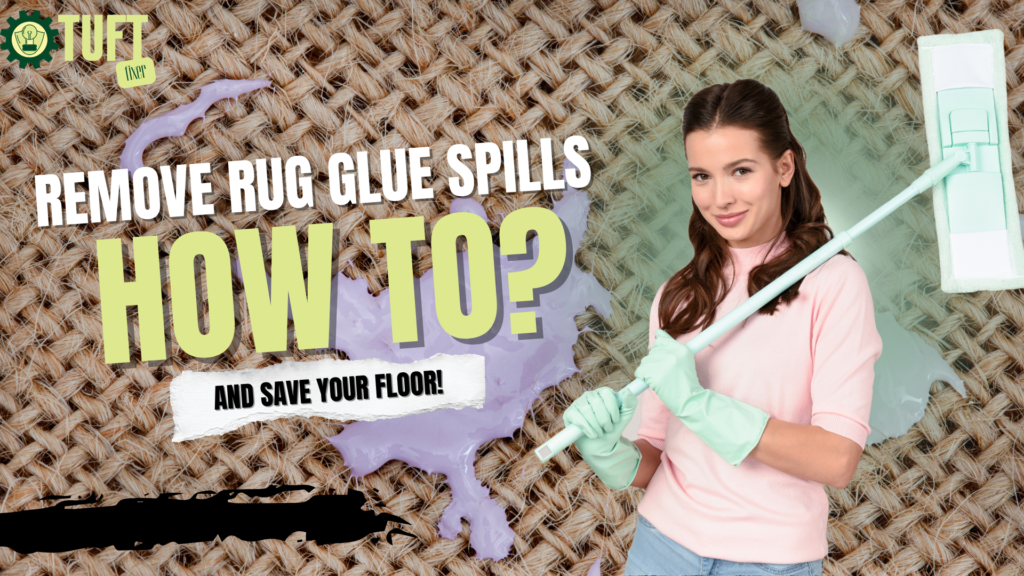
It happens in slow motion. You are finishing up your tufting project, holding the heavy bucket of rug glue, and suddenly splat.
You just spilled adhesive on your hardwood floor, your favorite jeans, or worse, your carpet.
The panic sets in immediately. You know that rug glue is designed to be permanent. It is chemically engineered to hold yarn together for decades. So, how on earth are you supposed to get it off your floor?
Don’t panic.
While rug glue is incredibly strong, it is not invincible. Whether you are dealing with wet latex, dried spray adhesive, or a sticky mess on your tufting gun, there is a chemistry trick to fix it. You just need the right solvent.
In this guide, we will break down the best carpet glue remover techniques to clean up your workspace without ruining your floors.
The Golden Rule: Is the Rug Glue Wet or Dry?
Before you grab a towel and start scrubbing (which might make it worse), you need to assess the situation. The state of the rug glue determines your strategy.
If the Rug Glue is Still Wet: You have a “Golden Window” of about 10–15 minutes.
- Do NOT wipe: Wiping spreads the rug glue into a thin layer that dries instantly.
- Scoop it: Use a piece of cardboard or a putty knife to scoop up the bulk of the blob.
- Blot it: Use a damp paper towel to lift the residue.
If the Rug Glue is Dry: Stop. Do not try to peel it off yet. If you peel dried latex off a carpet, you might rip the fibers out of your floor. You need a powerful carpet glue remover to break the chemical bond first.
Best Commercial Carpet Glue Removers for 2026
Sometimes, soap and water aren’t enough. If you are dealing with heavy-duty carpet adhesives or dried latex, you need a product designed to dissolve bonds.
Here are the top carpet glue remover solvents every tufter should keep in their emergency kit:
1. Goo Gone (The All-Rounder)
This is the gold standard for most sticky situations. It works exceptionally well as a carpet glue remover for spray adhesives (like the ones used to adhere pattern paper).
- Best for: Hard surfaces, scissors, and metal frames.
- Warning: It is oily. If you use it on your tufting cloth, you must wash it out, or new rug glue won’t stick to that spot later.
2. Acetone (The Heavy Hitter)
If you have spilled synthetic latex rug glue on concrete or metal tools, Acetone will melt it away.
- Best for: Cleaning your tufting gun scissors and metal parts.
- Warning: Never use Acetone on plastic parts or finished wood floors. It will melt the plastic and strip the varnish off the wood.
3. Vinegar and Dish Soap (The DIY Carpet Glue Remover)
If you don’t want to buy harsh chemicals, this mix works surprisingly well on water-based rug glue before it fully cures. Mix one part white vinegar, one part water, and a few drops of dish soap.
How to Remove Rug Glue from Hardwood or Concrete
This is the most common nightmare. You are applying rug glue to the frame, and drops fall onto the floor.
- Soften the Glue: Apply your chosen carpet glue remover or warm soapy water to the spot. Let it sit for 5 minutes.
- Scrape Gently: Use a plastic razor blade or an old credit card. Do not use metal, or you will scratch your floor.
- Roll It: Once the rug glue softens, try to roll it with your thumb. Latex often balls up like rubber cement.
- Final Wipe: Clean the area with a damp cloth to remove any carpet glue remover residue.
If you find that your rug glue is consistently dripping while you work, you might be applying it too heavily. Check our guide on the Best Glue for Tufting Rugs (Don’t Ruin Your Project) to ensure you are using the right consistency and application method.
How to Remove Glue from Your Tufting Gun
If you get rug glue inside your tufting gun, it can cause the gears to seize or the scissors to stop cutting. This usually happens if you are tufting too close to a wet glued area (which you shouldn’t do!).
The Fix:
- Unplug the gun.
- Dip a Q-tip in a small amount of carpet glue remover (like rubbing alcohol or Goo Gone).
- Gently rub the rug glue spots on the metal parts.
- Critical: If you use a solvent on the scissors, you must re-oil them immediately. Solvents strip away the lubrication.
If your scissors are clean but still not working, the rug glue might not be the problem. You might have a mechanical alignment issue. Read our troubleshooting guide: Tufting Gun Scissors Not Cutting? (How to Stop the “Looping” Nightmare).
How to Remove Rug Glue from Your Tufting Cloth (Mistakes)
What if you glued the wrong part of the rug? Or you spilled rug glue on the front of the yarn?
This is the hardest fix. Once rug glue cures into yarn, it is essentially plastic.
For Small Spots on Yarn: You cannot “wash” it out. Even the best carpet glue remover might damage the yarn dye.
- Wait for the rug glue to dry completely.
- Use small embroidery scissors to carefully snip away the glue-soaked fibers.
- Fluff the surrounding yarn to hide the bald spot.
For The Backing Cloth: If you haven’t tufted that area yet, be careful. If you saturate the cloth with an oily carpet glue remover, the residue might prevent your future tufts from holding.
- It is often better to let the spill dry and tuft right through it (if it’s thin) or replace the cloth if the spill is massive.
If the spill is so bad that the structural integrity of the cloth is ruined, you might need to patch it. See our guide on Why Is My Tufting Cloth Tearing? for tips on how to fix damaged backing.
Conclusion
Spills are part of the process. Every master tufter has a stain on their workshop floor that reminds them of “The Great Spill of 2026.”
The key is preparation. Keep a bottle of carpet glue remover in your toolkit right next to your yarn. If you act fast, a rug glue spill is just a 5-minute distraction. If you wait, it becomes a permanent feature of your studio.
Clean up your mess, re-oil your gun, and get back to finishing that rug!